

Why Study Abroad Matters
It's fun to travel abroad. It can also be one of your most valuable college experiences.

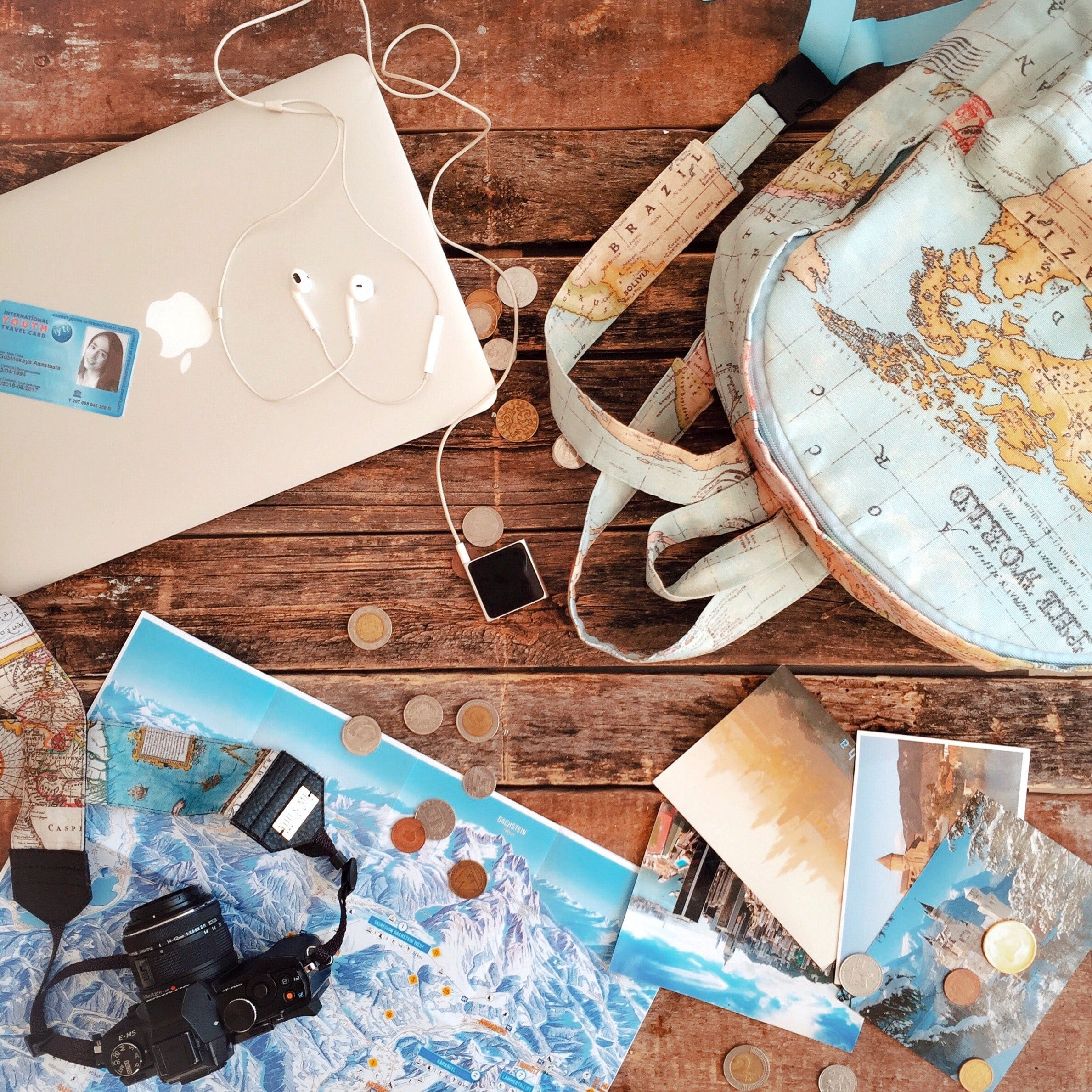
Photo by Rocky Scotty on Unsplash
The study abroad trip I took during my junior year wasn’t just one of my most memorable college experiences; I also feel it was the most important.
In education, we often talk about how to prepare college students for the world. Many educators focus on college-to-career pathways, emphasizing the hard skills needed for a specific job. For example, coding is a hard skill if a student majors in computer science.
But soft skills are equally, if not more important. They’re the skills that translate to any field or position and also benefit us outside the workplace. These include skills like interpersonal skills, leadership skills, creativity, critical thinking, and empathy.
“The highest form of knowledge is empathy.”
– Bill Bullard
Empathy, in particular, is a critical skill to existing as a human in this world. It allows us to relate to each other’s experiences and, in so doing, to find compassion for each other. It’s what allows us to work together as a team, to be great leaders, or to come up with innovative solutions to human problems.
It also allows us to be good citizens of this planet, which includes the ability to hold differences while still caring about others, a trait that’s unfortunately sorely lacking in our American culture today.
Too often, we become insular, believing the rest of the world thinks like us — or, if they don’t, that they should.
The world is filled with incredible diversity. We are all unique, and not just individually. Travel brings out how people of different cultures interact with the world in diverse ways.
And that’s a good thing. We shouldn’t all be the same. We would never experience challenges to our thinking or learn to question our assumptions, important aspects of forward progress.
Moreover, the constant reevaluation of what we think we know and how we “know” it is a cornerstone of learning — about the world around us and also ourselves.
“That is what compassion does. It challenges our assumptions, our sense of self-limitation, worthlessness, of not having a place in the world. As we develop compassion, our hearts open.”
– Sharon Salzberg
I taught world religions for many years and noticed these things as students learned about cultures they’d never experienced before. When we come to know others from diverse backgrounds, we naturally become more tolerant and less prone to demonizing other religions, ethnicities, or cultures. We also start to challenge our own deeply held assumptions.
I witnessed firsthand how students' minds changed right there in the classroom as fellow classmates bravely shared their backgrounds and experiences. It was like a bit of this benefit of studying abroad without the traveling.
Sometimes we forget that we’re all part of one human family. And once we meet and connect with others from different backgrounds, what once felt like “otherness” becomes simply “humanness.”
“Humanity’s collective mission in the cosmos lies in the practice of compassion.”
– Dalsaku Ikeda
College-to-career pathways do, of course, matter. We all want a monetary “return on investment” — a well-paying career worth the college price tag. But some lessons are priceless.
This includes the understanding that as different as we appear on the surface, we’re all human at the core. It also includes understanding that there’s more than one way to think about the nature of the universe and everything in it.
That may be the hardest-won lesson of all — the basic idea that there isn’t one way to think. I don’t just mean a difference of opinion. I mean a difference in how we think about the nature of reality and everything in it.
When we have a difference of opinion, we often treat that difference as if it exists along a binary where there’s a “right” and a “wrong.” Rarely do we engage with others as if they could have a completely different way of looking at the same things and, therefore, we could all be “right” in our own ways.
Because we all have diverse minds, not just diverse backgrounds, even siblings raised in the same home can have different perspectives, different ways of seeing the world.
However, it’s really in experiencing other cultures that this fundamental principle becomes a lived experience. It helps our minds wake up to the lived reality that there are different ways to think about, well, everything.
This is especially true when you visit a culture that’s very diverse from your own because the differences will be even starker. For example, I traveled to parts of South America, Africa, and Asia when I studied abroad. And though I learned through experience what the term “culture shock” meant, I also learned to see the world through a completely different set of eyes.
Of course, you can do that by visiting any foreign culture, no matter how similar to our own, because travel has a unique way of waking us up.
Travel shows us our differences but also develops our empathy. And thus, it blurs the line between “us” and “them” while simultaneously “training” us to hold differences through the lived experience of other cultures.
These may seem like two separate ends of a spectrum: “We’re the same” and “we’re different.” But they actually exist together because the ability to accept differences shows us the humanity in all of us without feeling personally threatened by a divergent viewpoint.
It’s the cornerstone of compassion. And that’s because our circle of “self” and “other” widens. We don’t lose ourselves in accepting the other, and we become more inclusive, and hence compassionate, toward all humanity.
“Love and compassion are necessities, not luxuries. Without them, humanity cannot survive.”
– Dalai Lama
Of course, let’s be real; we also travel because it’s fun. The travel bug bit me at a young age. I took my first study abroad trip at 14 because I was thrilled by the idea of traveling to another country. And it was definitely fun.
And — I also experienced another culture and, therefore, widened my perception of the world. Plus, that trip's entire focus was learning about then-conflict-ridden Northern Ireland. Thus, the trip introduced me to foreign cultures and the idea that learning about others can lead us to empathy and compassion.
And compassion, of course, is how we not only come together to see the world but also to make it more inclusive. In other words, to help be a part of changing the world for the better. And what can be more central to the college experience than that?
Want More?
Soujournies has a comprehensive list of useful things to know about studying abroad.
Use the study-abroad prep list from GoAbroad.com to help you make your own checklist of what to prepare before you travel. You can also search the website for study-abroad opportunities.
And check out Go Overseas for tips on how to make the most of your study abroad experience.
What’s New?
I’m at work on a comprehensive study abroad planner to help students plan their trip, organize crucial information like flight schedules and contact information for accommodations, stay on top of their program’s coursework, track their budget and expenses, and better enjoy their trip. It’s still a work in progress, but I hope to have it available by next week.
In the meantime, my original college planner has a study-abroad section, along with organizers to help with a wide variety of other college topics like study sessions and extracurriculars.